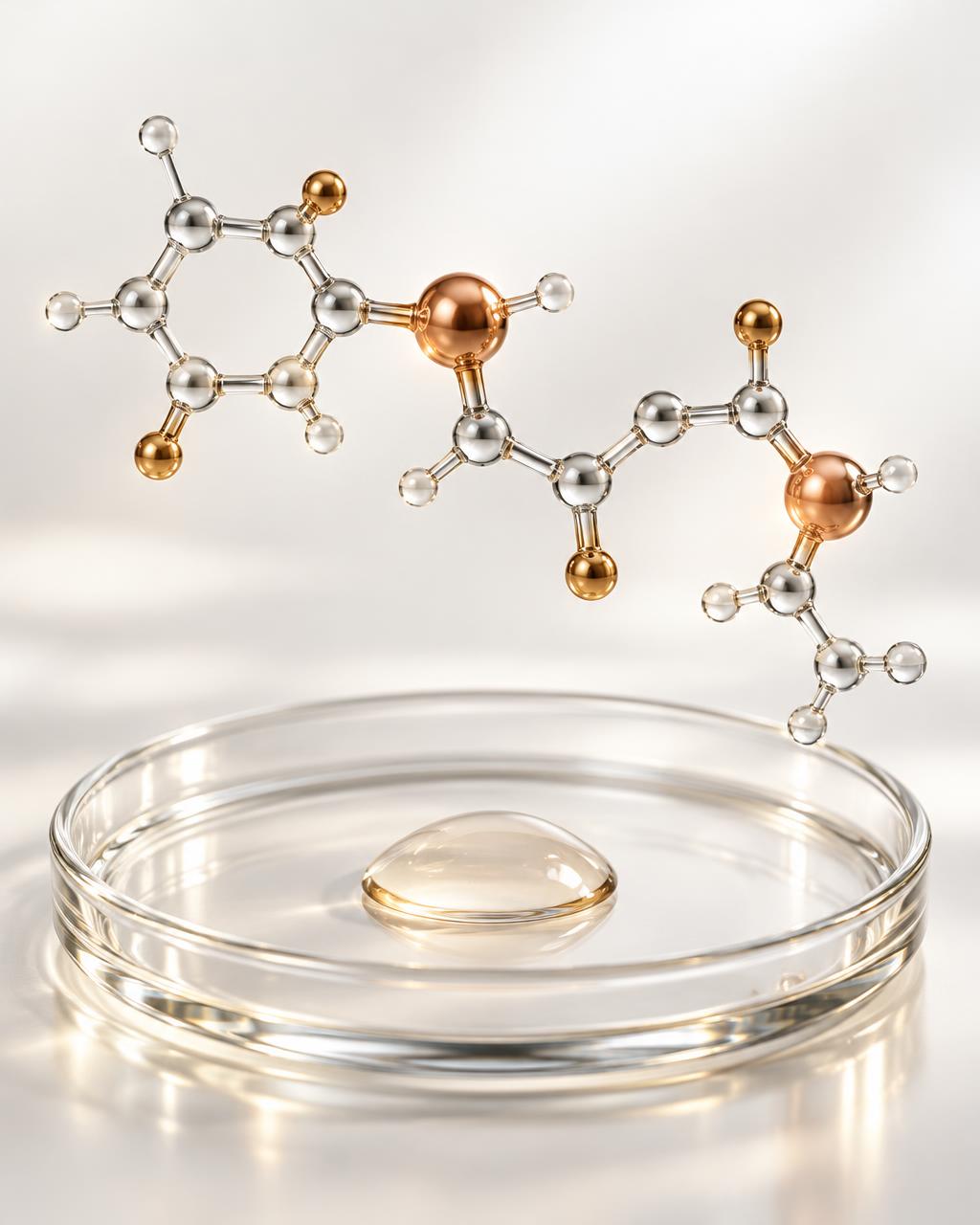
THE SCIENCE BEHIND
GHK-Cu Copper Peptide
A tiny peptide your own skin already knows. GHK-Cu pairs three amino acids with copper to help skin look firmer, smoother and more radiant — the heart of Vivaly's peptide science.
Shop the collectionTHE BIOLOGY OF SKIN AGING
Why skin changes over time
Sun, stress and time gradually slow the skin's natural renewal. Collagen and elastin weaken, and the result shows up as fine lines, lost elasticity and dullness.
GHK-Cu is naturally found in the human body — in plasma, saliva and urine — and its levels decline as we age. Replenishing it on the skin is one way to support what skin already does on its own.
THE COPPER PEPTIDE DIFFERENCE
What GHK-Cu does for skin
- Collagen & elastin supportGHK-Cu is studied for helping skin maintain the collagen and elastin that keep it looking firm and bouncy.
- Smoother-looking textureBy supporting the skin's natural renewal, it helps soften the look of fine lines and uneven texture.
- Radiant-looking skinCopper peptides are used in skincare formulas designed for a fresh, radiant-looking complexion.
- Comfort & resilienceIts soothing properties help support a calmer, stronger-feeling skin barrier.
UNDER THE MICROSCOPE
Three amino acids. One copper ion.
WHAT'S INSIDE
The GHK-Cu molecule
Three amino acids — glycine, histidine and lysine — hold a single copper ion. Together they form the copper peptide your skin makes naturally.
Glycine
The smallest amino acid, a key building block of collagen.
Histidine
Binds copper tightly so it can be delivered to skin cells.
Lysine
Helps the peptide connect with skin cell receptors.
Copper (Cu)
An essential trace mineral the skin relies on for renewal.
THE VIVALY APPROACH
Paired with the Sacred Lotus
Vivaly combines copper peptides with sacred lotus seed extract, ceramides and antioxidants — a pairing developed from Pat Riley's decades of research and originally covered by U.S. Patents #5,925,348 and #6,468,564.
Discover our story